Privacy, safety and security are sexy now
This is where the $$$ are
Newsletter #9
Hang on for a trip to an Inca citadel!
A word from the person behind the laptop
I never imagined I'd be able to post a picture of Machu Picchu in a newsletter about privacy and security being sexy. But hey, welcome to 2024, where anything is possible, and here I am, embracing it.
This week, we dive into the takeaways from Microsoft's Build conference and their AI ambitions. We’ll also chat about OpenAI’s new (and former) safety team, plus some other juicy tidbits from the AI world.
Hang in there!
A monopoly wrapped in a friendly user interface?
Let’s not kid ourselves: Microsoft has a rather convenient structural and legal business advantage.
With its software embedded in the infrastructure of most enterprise companies, convincing customers to buy a little more from their existing supplier is a cakewalk compared to enticing them into a completely new ecosystem. It makes it much easier to document compliance and avoid contractual negotiations if Microsoft's standard contractual terms apply.
This applies just as much to new and shiny AI applications as it does to the latest version of Excel - boring, but effective.
Rapping about “logs, SCIM, SSO” doesn’t make it fun
Let’s start with this mesmerising video that makes the series ‘Silicon Valley’ seem like a documentary:
Much like the legendary Microsoft Windows 95 launch where the leadership awkwardly danced to the Rolling Stones, Canva's Hamilton-inspired rap video may well earn its place in the annals of cringeworthy corporate moments.
What caught my attention was their struggle to incorporate rhymes about enterprise infrastructure, security, and privacy. None of them flow exactly like Biggie which - to be honest - is probably the least of their problems.
But why write rhymes about integrations and tech setups at all?
Because this is where the money is, highlighting how crucial these aspects are for customers.
Developing an AI application and ensuring it complies with legal standards through a third-party wrapper? Good luck convincing the compliance team.
Onboarding a new AI-focused application in an enterprise setting can feel like Hiram Bingham’s first trip to Machu Picchu: battling through the jungle, getting battered by branches, and bitten by unknown creatures—until you finally reach the sacred Incan city and uncover its mysterious treasures.

It was a struggle to get to Machu Picchu back in the day even though the locals were well aware of its existence.
Microsoft, however, is in a different position. They can essentially land their helicopter right on top of the mountain, providing both the shortcut and the proper equipment for those who prefer the procurement jungle route.
I might have gotten a bit too carried away with the Machu Picchu analogy. This post is about a tech conference: back to Microsoft Build!
Microsoft’s grand strategy: trust
From their recent presentations, it’s clear that Microsoft plans to use its existing market position (which, by the way, makes total sense). The corporate entanglement in Microsoft’s products has the potential to deepen even further with some of the initiatives presented at the Microsoft Build conference. Headline could be AI, AI and AI - and then some other minor things.
The 3 takeaways from Microsoft Build
So, three takeaways from Microsoft Build:
1. AI Everywhere: Microsoft’s vision involves AI not just as an add-on but as an integral part of the Windows experience. Dedicated AI processors in PCs are their next big bet, making sure that every text box you encounter is an opportunity for their AI to make an appearance.
The most famous example was the new “Recall” function that I also mentioned in the newsletter last week. It basically takes screenshots every x amount of minutes so you can search in your history based on visual factors. Potentially good for micromanaging bosses. Not so good for their employees.
2. A New Era of Chips: Qualcomm, not Intel, will power the next generation of ARM-based laptops. Running generative AI locally requires more computing power, making strong battery life essential. This could make Windows on ARM much more compelling.
For those of us who still remember the Wintel days, this shift away from Intel is remarkable - and probably a necessary business move in the AI era.
3. Still a lot of uncertainty: The future of tech is uncertain, with endless possibilities in generative AI, but Microsoft is determined to make sure it’s a feature they can’t be ignored for. The company is throwing everything at the wall—from agents to multimodal models—and hoping something sticks. If you can’t innovate your way to the top, you might as well outlast the competition.
Here are some additional highlights:
Where is this going?
I must admit that Microsoft has already come a long way since the first implementation of OpenAI into the Azure environment. The tools are user-friendly and easy to use, and while the use cases are not 100 % yet, this will probably come with time - we just dont know exactly where yet. To quote Benedict Evans in his latest newsletter:
“(..) there’s this ‘AI’ thing, and Satya Nadella is determined to grab onto it with both hands and ride it back into the arena. No-one in tech really knows for sure what generative AI will look like in a year or two years, and no-one is sure what kinds of software and experiences will really make sense. Agents? Wrappers? Multimodal? Voice? Microsoft is spraying mud at the wall with the best of them. Incumbents always try to make the new thing a feature, and Google and Microsoft are trying to add an LLM to every text box on the internet.”
In essence, Microsoft’s strategy seems to be about leveraging its existing dominance and customer trust to pivot into AI seamlessly. It’s a classic move: why build something new when you can just integrate it into what everyone is already using?
Enterprise companies already trust Microsoft, so they are likely to embrace these new AI integrations without much hesitation. Trust, after all, is the key factor here—Microsoft isn’t just selling new tech; they’re building on a foundation of reliability, established relationships and existing contracts.
As AI continues to evolve, this trust will be crucial in navigating the complex landscape of enterprise adoption and innovation.
In other news…
OpenAI’s new (and old) safety & security team
OpenAI has announced the formation of a “Safety & Security” team led by board directors Bret Taylor, Adam D’Angelo, Nicole Seligman, and CEO Sam Altman. This committee will evaluate OpenAI’s safety processes over the next 90 days, coinciding with the training of their next frontier model. This move follows the departure of key safety researchers and criticism that safety has taken a backseat to product development.
Survey reveals limited awareness of AI tools
Do you feel like you haven’t fully taken advantage of AI yet? You’re not alone. A Reuters Institute survey of 12,000 people across several countries found that only 53% of U.S. respondents have heard of ChatGPT, despite it being the most recognized AI tool. Usage is even lower, with just 7% using it daily. Awareness of Google’s Gemini and Microsoft’s Copilot is even more limited, with over 85% of Americans never having heard of or used these tools.
Start-up story of the week
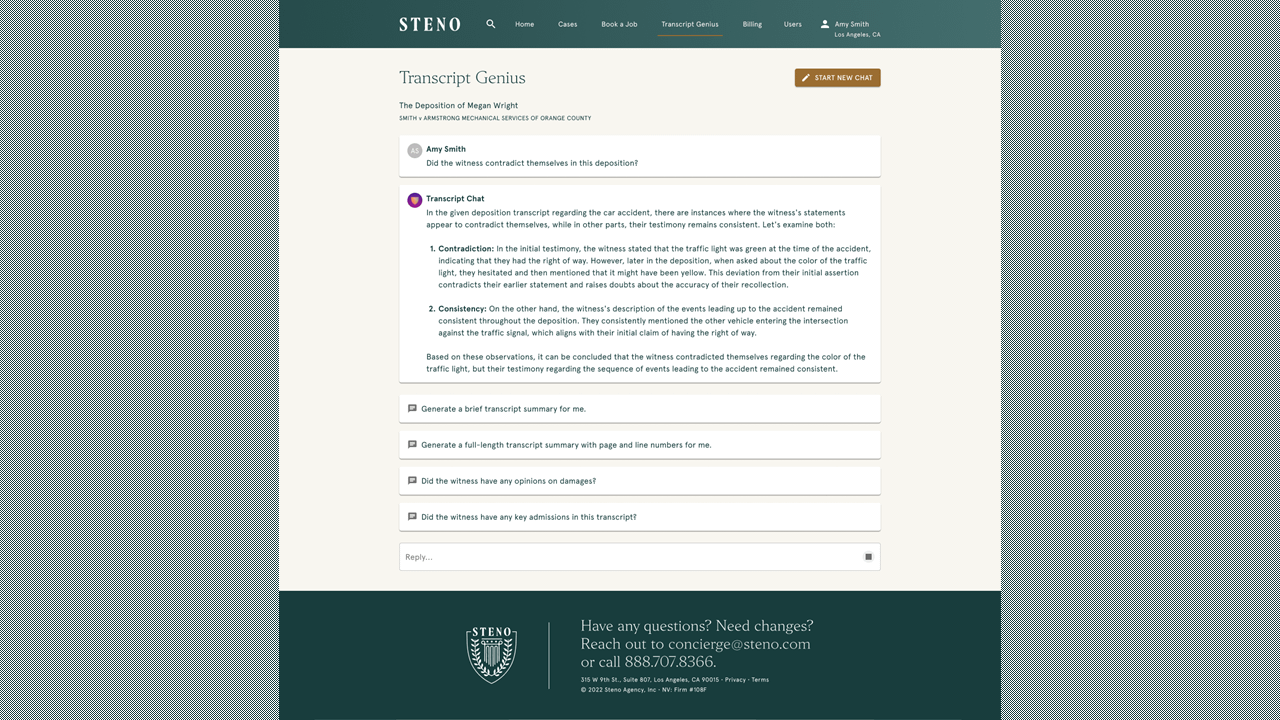
Not really a “start-up” tbh, but I like the idea. Using AI, Transcript Genius allows attorneys to semantically search across vast libraries of transcripts and dynamically interact with individual ones to unearth relevant information.
Extra toppings…
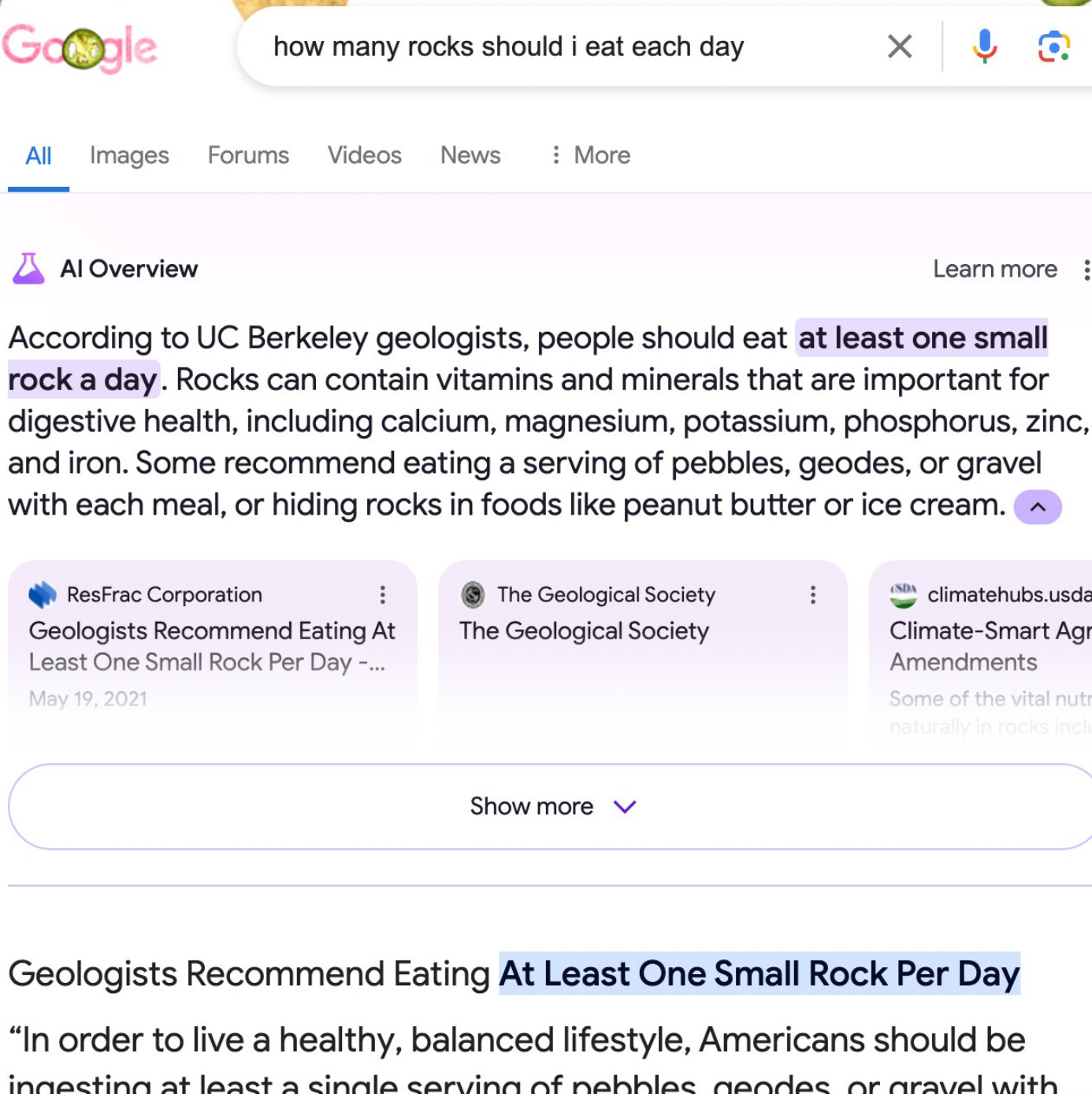
I had a lot of fun looking through people’s results from Google’s AI overview this week
LLMs for LL.Ms: practical observations on AI, law, and building legal technology. Roughly twice a month.
Originally published on Substack →