“No” was apparently Lost in Translation
3 reasons Scarlett Johansson has a good case against OpenAI
Newsletter #8
Scroll through for a real-life Black Mirror episode.
A word from the person behind the laptop
I try to find different things to cover each week which means not covering OpenAI every week.
Luckily there’s usually a lot happening in the space of AI and law so it's usually not that difficult - but recently it seems like the legal challenges against OpenAI are stacking up with the same pace as they’re rolling out new features.
That means we’ll cover OpenAI (again) this week, but this time with a focus on… (drumroll) Scarlett Johansson. This legal case has the potential to show us how courts will tackle major issues like the use of biometrics, artistic likeness, and consent.
We will also talk about billing, Black Mirror and more copyright.
See ya on the flip side.
Bob Harris wouldn’t let something like this happen to Charlotte
I’ve always been obsessed with the movie ‘Lost in Translation’. My millennial hipster heart is a sucker for Sofia Coppola's grainy shots of Tokyo’s neon-lit streets. The movie transports me back to a simpler time when the biggest problem was translating between Japanese and American languages and cultures, and screen time was naturally limited by the size of a cathode-ray tube.
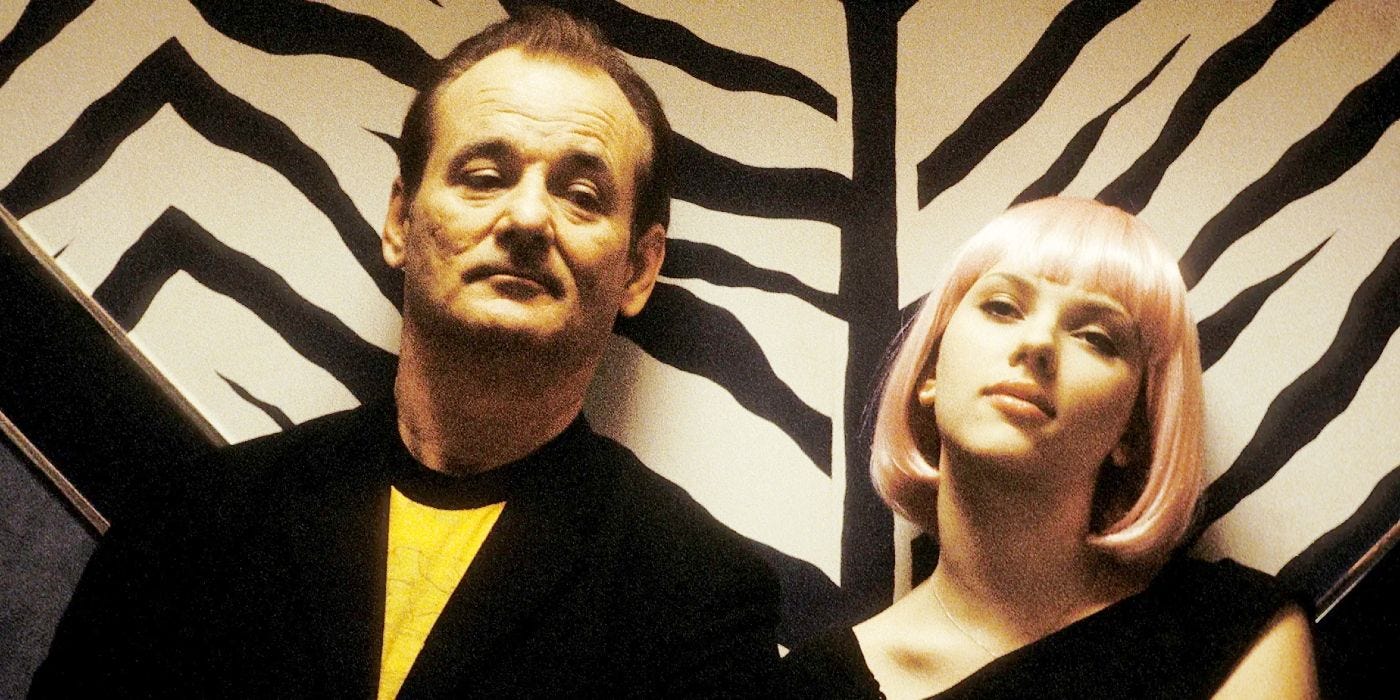
The movie was also Scarlett Johansson's breakthrough on the big screen. Since then, her husky voice has become iconic. This distinctive quality made her a perfect fit for the voice acting role in "Her," where she (or her voice) played an AI assistant.
Since the launch of ChatGPT, tech bros have been obsessed with the idea of a personal assistant inspired by the movie "Her." With the new capabilities of GPT-4o, this might suddenly be possible. This prompted (no pun intended) OpenAI's Sam Altman to reach out to Scarlett Johansson with an offer to be the voice of GPT-4o’s character, Sky.
When she declined, they seemingly proceeded without her consent. What could have been a great tech gimmick blurring the line between fiction and reality ended up being yet another example of “move fast and break things” even though many people thought tech had moved on from the 00’s.
To coincide with the launch of the demo, Altman posted a tweet celebrating the new AI assistant, which many noted sounded suspiciously like Johansson's voice.

Here’s the infamous tweet by Sam Altman considered by many as a reference to the movie of the same title
A comparison video circulated online, highlighting the eerie similarity between Scarlett's voice and the AI-generated one—though, in my humble opinion, there are notable differences as well.
I’m not one to judge whether it’s actually Scarlett Johansson’s voice or not, but there’s no question that the events leading up to the demo release put the case in a different perspective.
Listen to a comparison here:
Scarlett’s lawyer must be rich
This isn’t the first time Johansson has taken legal action against major corporations. She previously sued Disney for releasing "Black Widow" on Disney+ simultaneously with its theatrical release, breaching her contract which guaranteed an exclusive theatrical run. Disney responded aggressively, disclosing her $20 million upfront payment for the movie, a move seen as a tactic to undermine her case.
“In a time where we are all grappling with deepfakes and AI reproductions,” Johansson stated in a response to the GPT-4o demo release, “I believe these are questions that deserve absolute clarity.”
The new lawsuit against OpenAI not only seeks to protect her personal and professional rights but also addresses broader concerns about the ethical use of AI and digital likenesses. These issues are hot topics that everyone seems to be discussing, but there are currently as many definitions as there are Marvel movies. No exaggeration.
The case is important though, because it could help set significant precedents for how biometric data and personal attributes are used in technology, and whether and when explicit consent is required.
Let’s go through 3 reasons that she might have a good case:
Judges might not treat technology companies as favourable as before
As mentioned in the tech podcast “Hardfork” recently, judges might historically have given tech companies like Google what could be considered a favourable treatment in copyright cases during the 2000s and 2010s.
Notable examples include “Authors Guild v. Google” and “Perfect 10, Inc. v. Amazon.com, Inc.”, where the outcomes were surprisingly favourable to the tech giants. Some legal experts argue that these cases could have easily resulted in less favourable outcomes, impacting the trajectory of digital copyright law significantly. For instance, in “Authors Guild v. Google”, the court ruled in favour of Google’s book-scanning project, determining that it qualified as fair use.

If the courts are not swayed by OpenAI as they were by the young, fresh, and "Don't be evil" Google, the outcome could be different - especially given the changing public perception of tech companies. This shift in attitude might significantly influence the Johansson vs. OpenAI case.
Scarlett or not: the reference is clear
Even if the AI voice isn’t an exact match for Scarlett Johansson, the reference to her voice might be clear enough for people to think it's her. This raises obvious questions about the boundaries of using a likeness - auditory, visual, or written - in technology, especially in AI where imitation is a core functionality. Can AI replicate or imitate someone’s unique attributes without explicit consent?
This issue becomes even more pressing when the voice in question is a significant part of an individual's brand and can potentially mislead consumers.
A surge in AI copyright cases
The Johansson vs. OpenAI case is unfolding in the context of a broader wave of copyright disputes in the AI domain. As AI technologies become more sophisticated, the legal system is increasingly challenged to address the nuances of these new capabilities. Recent high-profile cases, such as “New York Times v. OpenAI” and “Authors guild v. OpenAI”, illustrates the growing complexity of AI-related copyright issues.
In “New York Times v. OpenAI”, the newspaper sued OpenAI over the unauthorised use of its articles to train an AI language model. The court might find that even though the AI-generated content was not an exact replica, it was similar enough to mislead readers and dilute the value of the original works. This case underscores the importance of protecting original content from unauthorised use, especially in the age of AI.
Let’s see what the future holds
OpenAI has put “Sky” on hold for now, and claims that a different voice actor is the voice behind “Sky”. This probably won’t stop Johansson’s law suit though.
Her case against OpenAI taps into this broader legal trend, emphasising the need for clear guidelines and protections in the rapidly evolving intersection of AI and law.
As courts continue to navigate these uncharted waters of bits and bytes, the outcomes of such cases will be crucial in shaping the future of digital copyright law and the rights of individuals in the age of AI.
“Does it get easier?” Charlotte asks in ‘Lost in Translation.’
My guess is it won’t.
In other news…
Welcome to Black Mirror Season 71
Microsoft announced Copilot+ PCs at its Build conference, a new category of laptops designed for AI integration. A new feature “Recall” sounds like a joke - but unfortunately isn’t. The feature basically allows your laptop to constantly take screenshots to make user activity searchable via an on-device AI model. Now privacy professionals will have something to write about on Linkedin for the next many months. Oh dear…
And back to copyright…
Music generator Suno raises $125 million at a $500 million valuation. Despite the impressive funding, there are growing concerns about the lack of transparency regarding Suno’s training data. As the debate over AI-generated content and copyright intensifies, Suno's undisclosed data sources could spark legal and ethical questions, potentially impacting its future in the competitive AI music industry.
Start-up story of the week
It’s hard to find start-ups that are not working within the space of document reviews. Anyway, this one isn’t. At least not a 100%. Brightflag now uses invoice summaries for clients to enhance billing transparency. Will this work? I guess we’ll soon find out.
Learn something new
Have you cloned your own voice yet? Your voice might not be as distinctive as Scarlett Johansson's, but it's still incredibly easy to clone. I recently tried ElevenLabs, and while it’s not perfect, it’s pretty damn good - like most AI products these days.
Extra toppings

LLMs for LL.Ms: practical observations on AI, law, and building legal technology. Roughly twice a month.
Originally published on Substack →