IT’S A BUBBLE!
"Run you fools"
Newsletter #14
Hang around for an introduction to the Japanese stock market.
A word from the person behind the laptop
So apparently a 5 % drop in the stock market now qualifies as either a deep crisis or the start of a recession. I can’t figure out if it's the fault of Kamala Harris, the Japanese Central Bank or AI, but my Elon-powered-Twitter feed suggests that it’s probably a cocktail of it all.
How people sometimes connect these dots will forever be a mystery to me, but I guess that’s how Twitter 2.0 keeps me intrigued.

“Run you fools”
Anway, in this post-vacay scribble, we’ll have a look at AI bubble tendencies and what it might mean for the use of AI in legal. Hint: There’s a difference between big tech and legal firms.
Disfruten!
Even broken analysts are right twice a day
It’s easy to make fun of AI bros. The sub-category of crypto bros spending time telling me I’m falling behind if I’m not using AI. Exactly what “falling behind” means is not entirely clear to me though, but whatever. It definitely doesn’t sound good so please spare me.
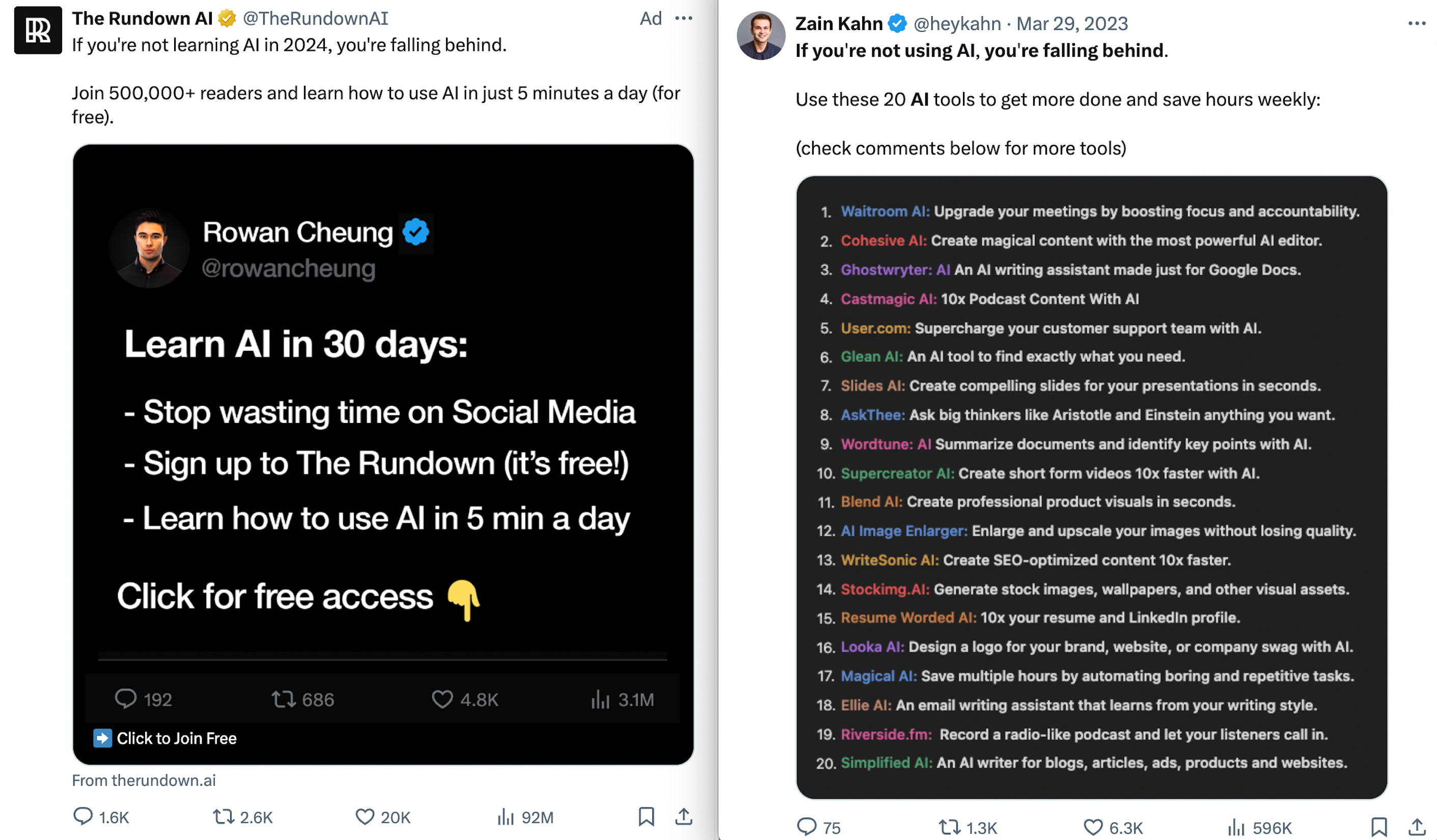
AI bros in their natural habitat: Twitter.
AI bros are the canary in the coal mine for bubble tendencies, just like Monkey JPEGs were for crypto. The more online AI courses you see advertised by a guy in a snapback and calf tattoos, the closer we are to the bubble bursting.
About a week ago, the stock market dropped, with tech stocks losing over $800 billion in value - ouch. This sparked conversations about the massive investments big tech companies have made in AI and the relatively little value it has delivered so far. It raised questions about Nvidia’s valuation, the return of profits to investors, and cost efficiency. As I mentioned in last week’s newsletter:“The burn rate is through the roof, and generative AI demands more energy than the power grid can handle. Training these models is equally untenable, thanks to ongoing legal woes (courtesy of some alleged theft) and the sheer volume of training data required.”
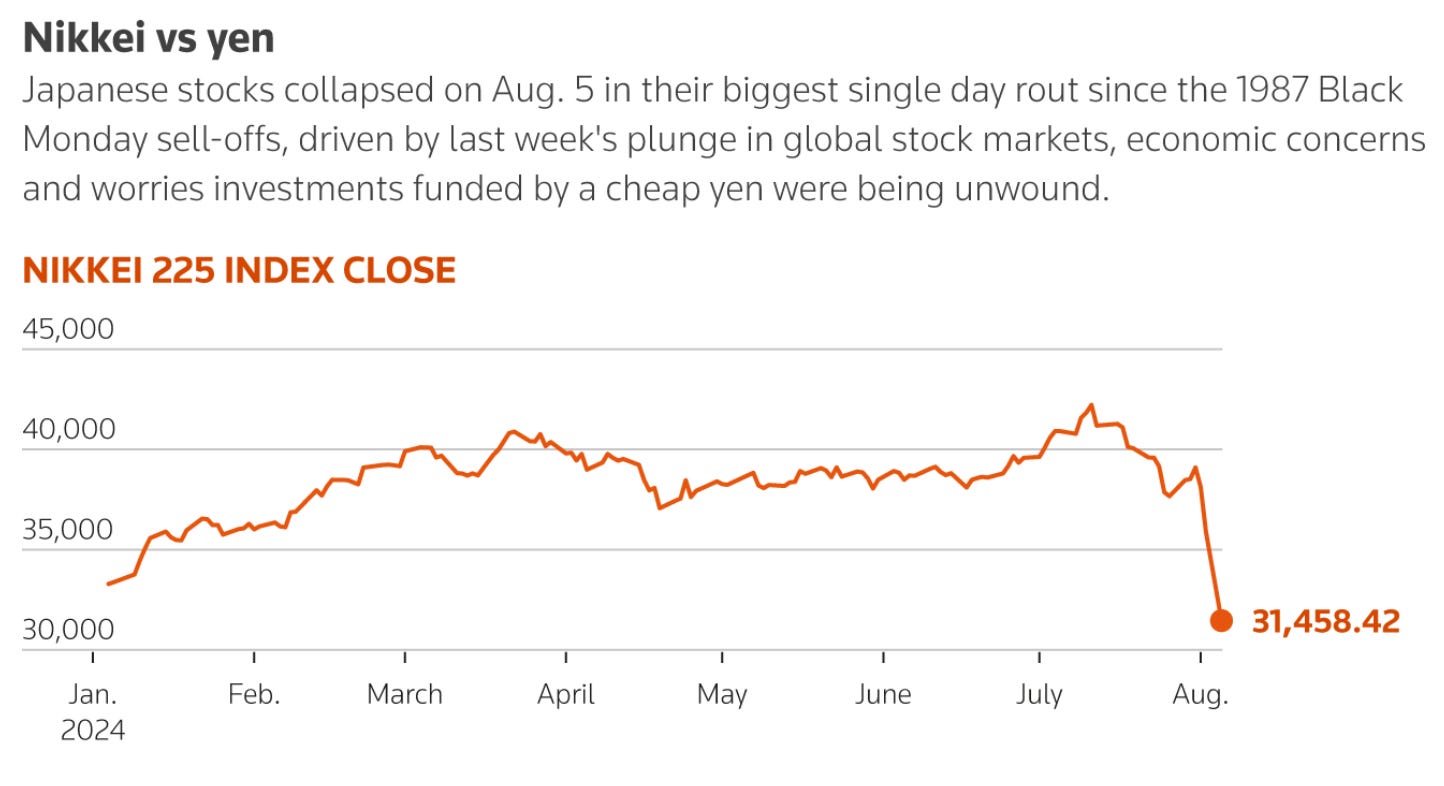
As Reuters reports it all started with a big market drop in Japan. What the relation is to AI is not entirely clear to me, but right now everything is apparently related to AI.
Analysts love to cry wolf every time the S&P 500 takes a hit, often blaming an AI bubble - and they will eventually be right in my opinion. Perhaps in a more dotcom kinda bubble rather than a 2007 crash, but at one point the AI companies will take a hit. I just don’t think now is the time.
Vincent Hendricks, the philosophy professor behind the Centre for Bubble Studies (yes, that’s a real thing), says a bubble happens when prices are driven by speculation, not actual value. It’s when people buy in just to sell higher to the next guy, not because it’s worth it. Eventually, reality checks in, and the bubble pops.
Now, look at AI. The hype has all the signs of a classic bubble. Investors are pouring money into AI, not because it’s proven, but because everyone thinks it’s the next big thing. It’s all FOMO, not solid returns. This frenzy is inflating AI’s value beyond reason. If these technologies don’t deliver or the market gets too crowded, the bubble’s going to burst - just like Hendricks predicts when speculation overtakes substance.
But perhaps that’s the idea?
They are both good at making money, but legal firms are not big tech
As Casey Newton from Platformer explains: “Amazon didn’t turn a profit for the first nine years of its life. Uber reported its first full-year profit this year - 15 years after it was founded. The end of zero-interest rates has made it much more difficult for tech companies to operate this way. But particularly for the richest public companies, making long-term investments and ignoring investors’ complaints has long been the norm”.
In other words these companies are used to pouring money into long-term bets, brushing off investor concerns, and sticking to their guns because they know that winning the race is what counts.
Now, let’s shift gears to legal firms. Unlike Big Tech, law firms aren't in the business of sinking billions into unproven technologies and waiting a decade to see a return. They’re good at making money - really good actually. But that also means they’re far more cautious about where they put it. When it comes to AI, law firms are dipping their toes in, but they're not diving headfirst. In a recent report by Deloitte on the future of legal work 76 % of legal firms have no Gen AI adoption at this point - but still 87 % expect GenAI to get adopted within the next 2-3 years.
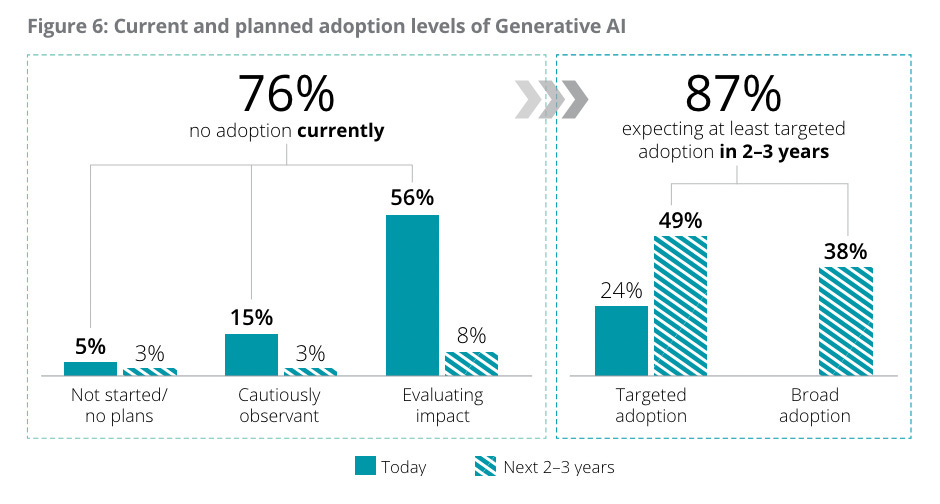
These numbers prove that there are still huge expectations on what to achieve with AI, but implementation is hard/slow/[insert your own reason]. Perhaps some lawyers are introduced to the use of GenAI by some businesses that promote primitive GPT-wrapper-tools, or perhaps their image is tainted by half-baked projects like Microsoft Copilot for legal, where the results so far might make you wonder if no lawyer at all would have been a better option.
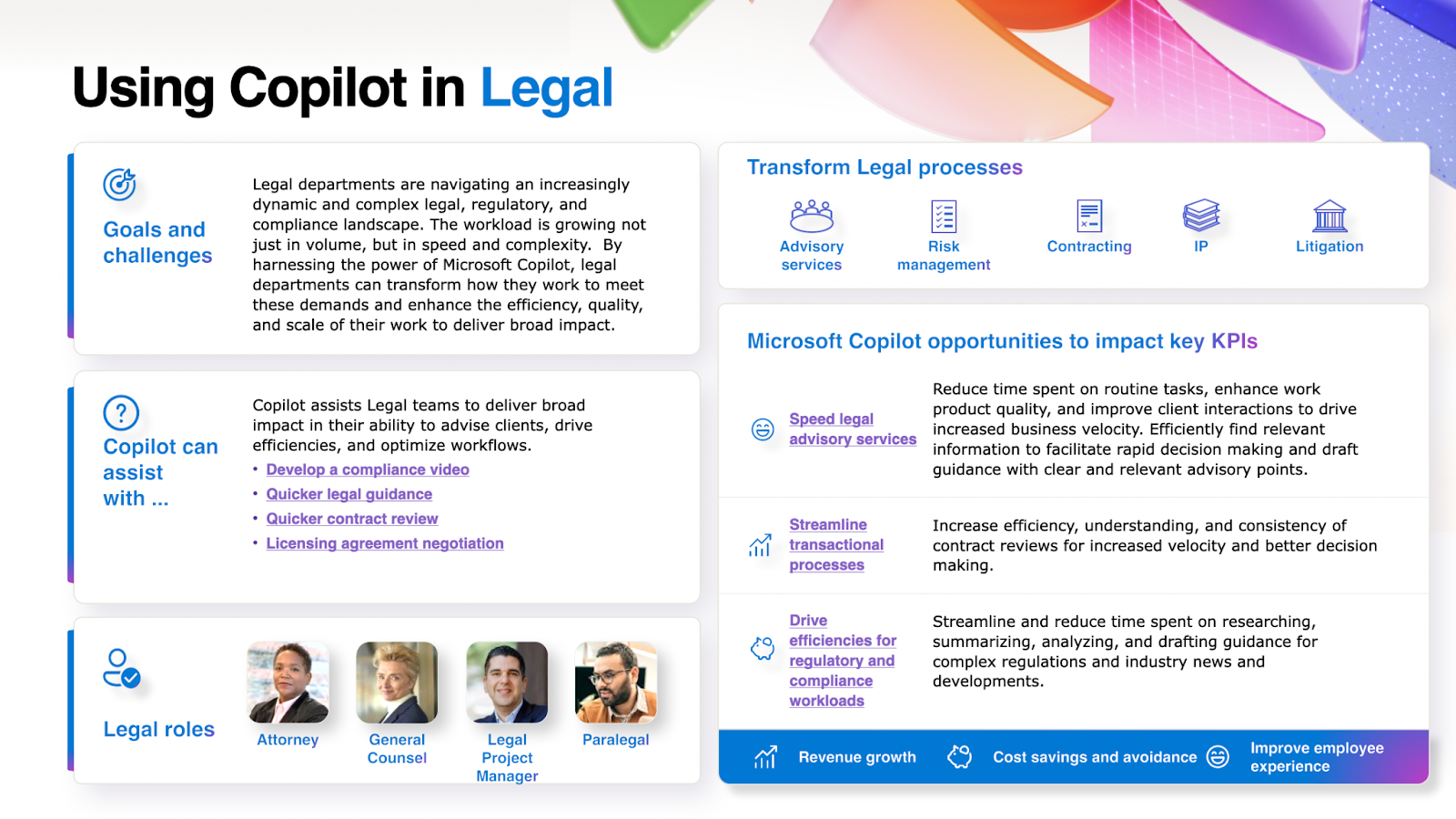
What is this? Seriously.
No surprise that legal professionals might feel underwhelmed by GenAI if their first experience comes from such a shallow take on the legal profession. In a field full of stubborn sticklers, slapping your contract onto a GPT-4 powered tool isn’t going to impress anyone - and it sure isn’t going to magically boost your drafting skills. If anything, it might just turn you into a lazier, less competent lawyer. I’m not saying better tools don’t exist - they probably do. But companies, especially ones with Microsoft-level resources, need to realise that this isn’t a one-size-fits-all situation.
So, are you telling us not to invest in AI?
Actually, no. Quite the opposite - especially time! Dive in headfirst, use it as much as possible, find the flaws and the good bits, and figure out what tool works best for your specific legal needs. Like Foo Fighers would say: "One of These Things Is Not Like the Other". It all depends on your role, practice area, language, jurisdiction, and about a hundred other factors. The tools are all very different, and there are still plenty of areas in legal where the market is not very saturated. Good tools will come.
Right now, I’d be more inclined to go for an AI product that comes with some hefty consultancy fees (never thought I'd say that), because you need someone who can tailor the tools to your needs - and keep them updated. In other words: it’s not going to be cheap.
And if a website offers you a one-size-fits-all solution, run. Even the Balrog is less terrifying.
In other news…
What bubble?
AI startups pulled in about a quarter of the $23 billion in total venture funding for July, raking in $5.8 billion. Only healthcare and biotech companies outdid them, with $6 billion. But let’s not ignore the slight decline - $6.3 billion in June and $12.8 billion in May. Even so, AI funding more than doubled in Q2 to $24 billion, marking the highest since ChatGPT launched in 2022. Seems like the hype train isn’t slowing down just yet.
Another day, another AI related lawsuit
A major class-action copyright lawsuit against AI image generators Stability, Runway, Midjourney, and DeviantArt is moving forward to discovery. The defendants tried to get the case dismissed, but U.S. District Judge William Orrick allowed the Copyright Act claims to proceed. This is a big deal in the growing field of copyright lawsuits against AI companies. If this case goes to trial and the AI companies lose, it could open the floodgates and seriously disrupt their business models.
Start-up of the week
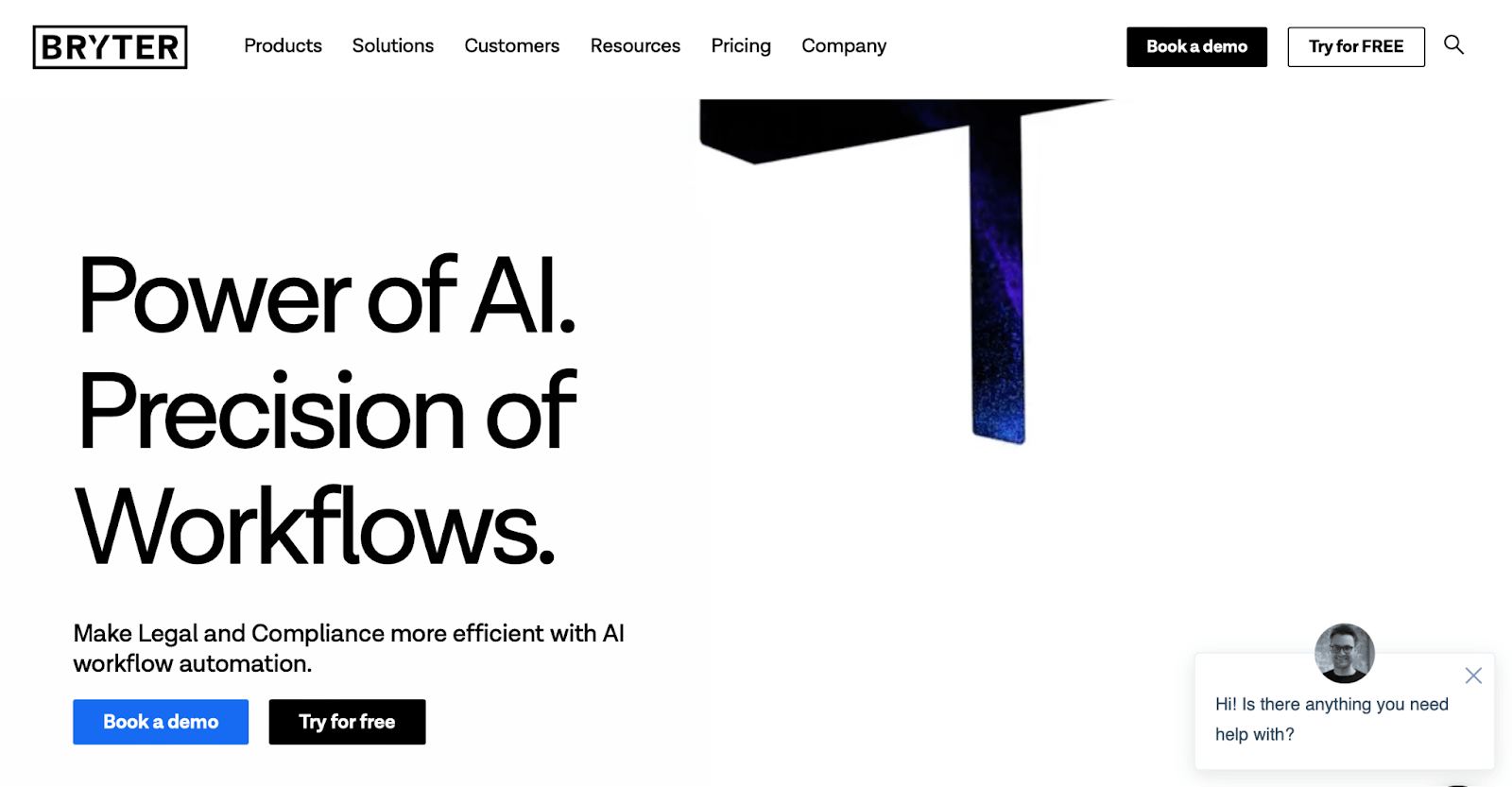
This week’s pick is Bryter, an AI platform promising to streamline legal workflows without a line of code. It sounds great on paper - automating processes, managing compliance, and smoothing out client interactions with just a few clicks. But I also feel like I’ve heard it all before. I know that this is possible with the current technology, but I’m curious to see the trade-off between individual company customisation and automation. Anyway, I like the idea!
Extra toppings
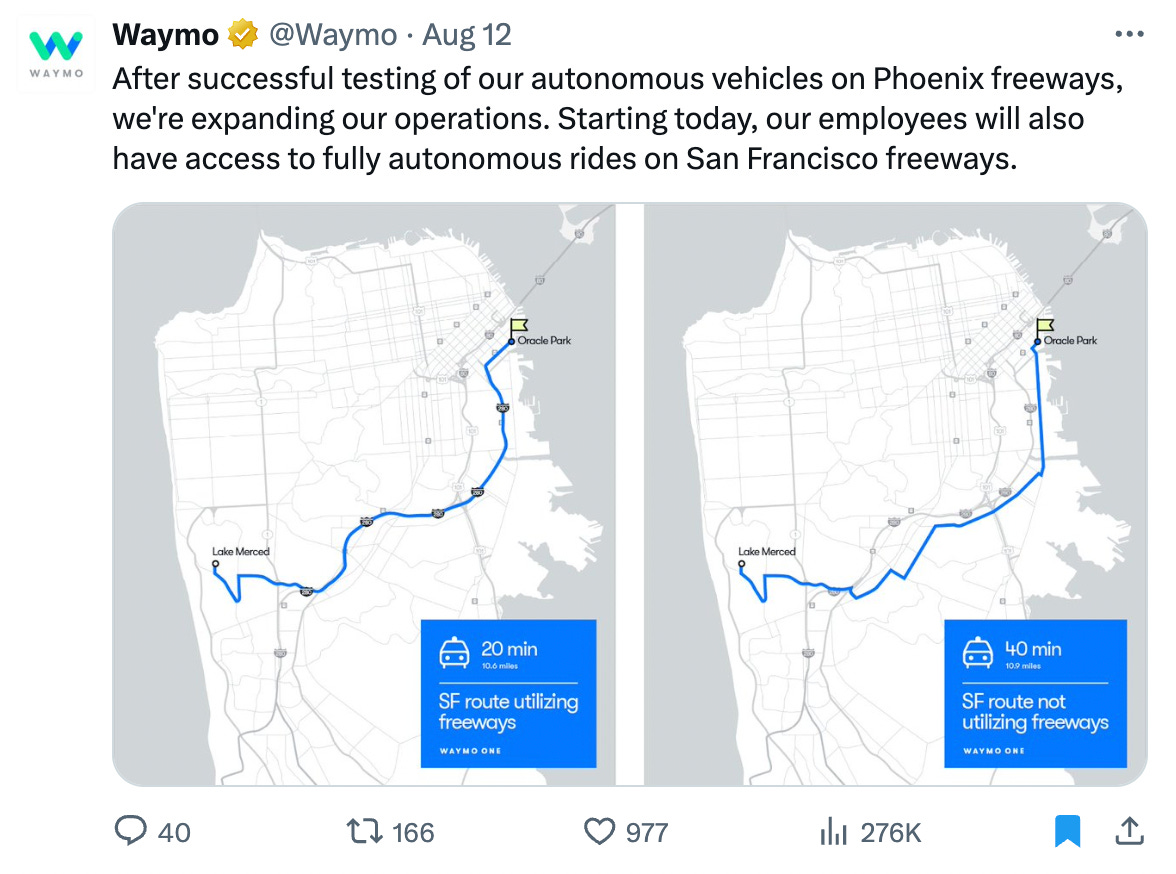
Waymo has been set loose!
LLMs for LL.Ms: practical observations on AI, law, and building legal technology. Roughly twice a month.
Originally published on Substack →