From campus to courtroom
The adoption gap is still wide open, folks
Newsletter #27
Read to the end for some great Dutch input on what to do with AI
A word from the person behind the laptop
For the last few years I've been thinking about how you actually close the adoption gap for lawyers beyond just buying expensive licenses and hoping people use them.
I don't think lawyers are uniquely bad at adoption, but I am curious how we solve it specifically for them.
That’s the newsletter today.
Enjoy!
Wednesday night in Aarhus
As I walk into Aarhus University, a bunch of law students are already there, but they’re not here for the workshop we’re about to run. I’m curious to see how many actually show up to a “Vibecoding Masterclass” on a normal Wednesday with the sun shining outside.
I speak to Philip, the chairman of the local legaltech organisation: “We’re expecting quite a few people here today,” he says. The association has a few “hardcore” members who show up for pretty much every event he puts together.
“The interest is definitely there, but I think there are actually quite a few students out there working on their own AI thing.”
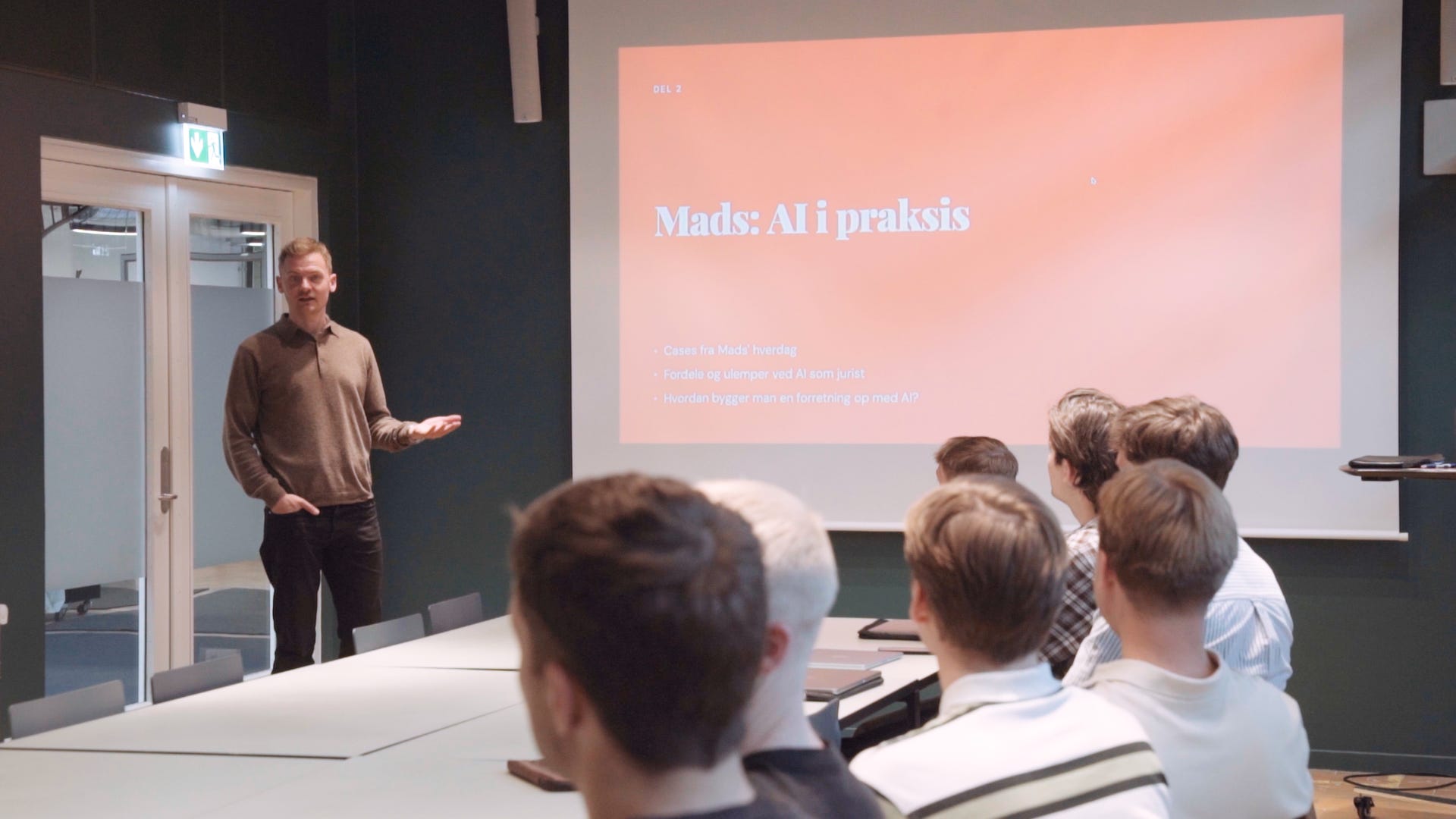
Mads Høegh talking about real life AI use cases
When the workshop starts, 12-15 students had booked their Wednesday evening to vibecode with their peers, which was a pleasant surprise. I know how hard it is to get students together for anything not directly linked to grades or a specific class, so I have to hand it to Philip for making this happen.
Now the question is what we’ll be able to achieve in the time we have together.
Getting started
After a one-hour intro covering AI in the legal sector, the upsides and downsides of vibe coding, and a framework for getting started on projects, we moved on to the actual building.
Some initial problems presented themselves when Google AI Studio turned out to be down. My choice for the day, mainly because the interface is easy to deal with and you can get pretty far without a paid subscription.
We quickly switched everyone over to Codex. The students were already familiar enough with the interface to get going, even though it looks a bit different from regular ChatGPT.
About half the teams started working on study-related problems. The other half worked on legal solutions tied to their student jobs. They all had reasonably good data to kick things off, though some datasets turned out to be a bit too large for the context window to handle.
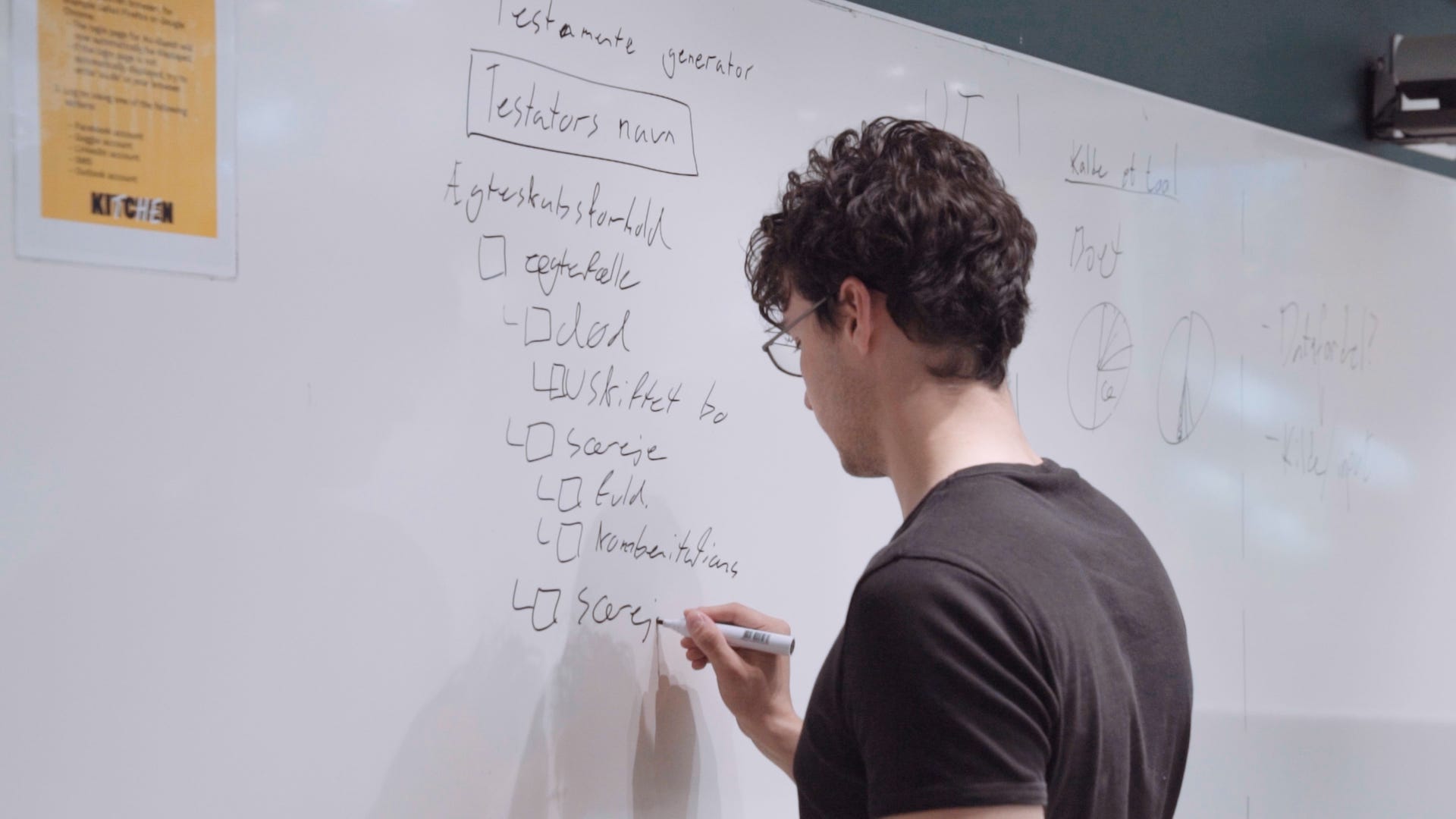
I was surprised that almost none of the students had been vibe coding their own projects in their spare time. But it confirmed something I’d already suspected: people don’t have time.
There’s a widespread assumption that students have more bandwidth than people with full-time jobs. I’d push back on that based on my experience.
What they actually built
With two of us supporting the teams, and despite a few technical hiccups, everyone presented something genuinely interesting after just two to three hours.
My personal favourite was a dashboard for students studying for a specific exam. The app presented which topics had been most prominent in past exams and guided students on where to spend their time. I thought it was legitimately brilliant, and honestly something I’d have used myself as a student.
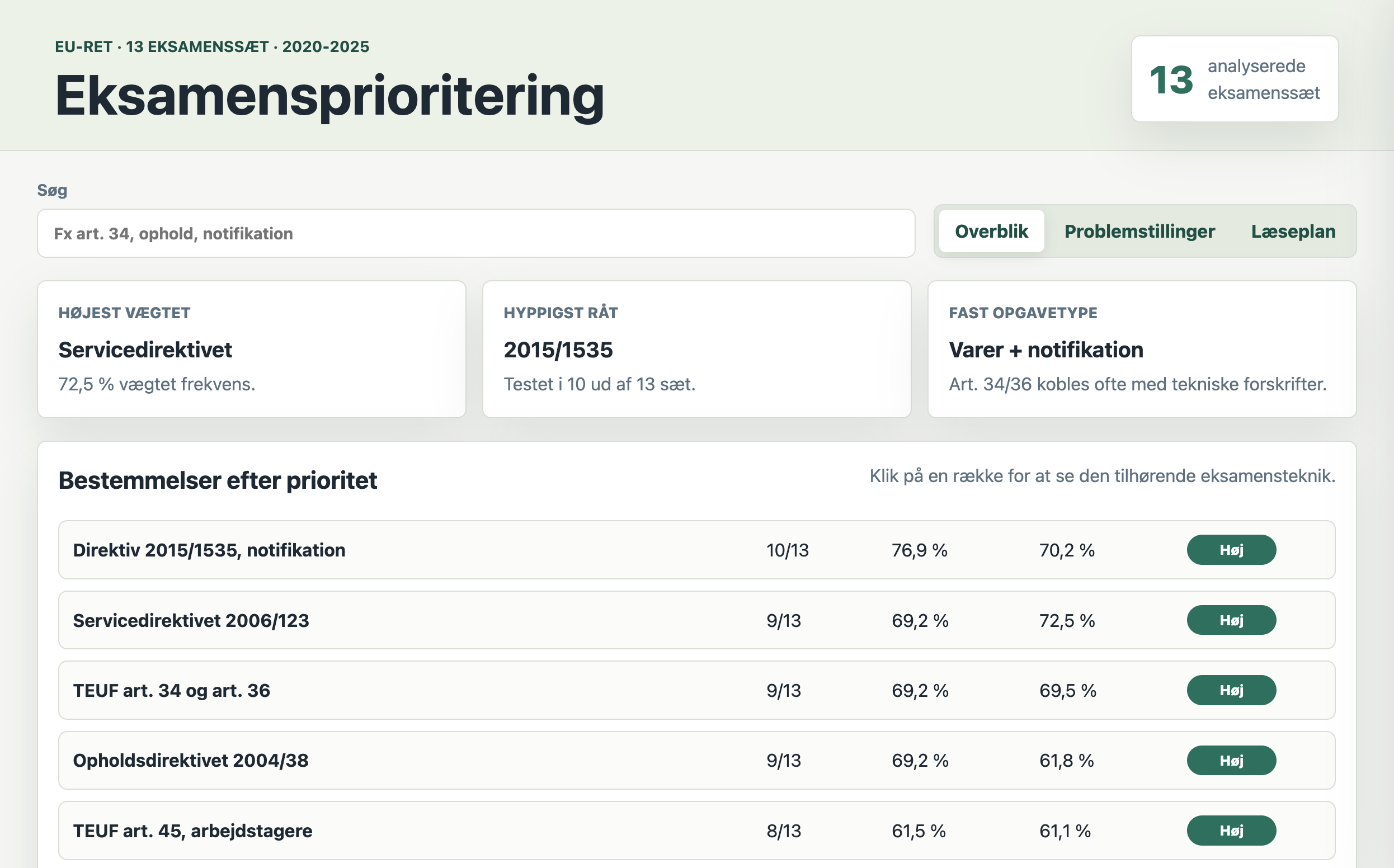
Here’s what the solution looks like. Amazing job by Jonas, Oskar and Magnus. Unfortunately, its only available in Danish, but you can access the full version here.
Other strong solutions included a tool supporting legal interns with drafting standard inheritance documents for clients, and a system for organising knowledge from a particularly unstructured professor. If you’ve been to university, you know exactly the type.
The adoption gap will persist
I’ve been teaching this stuff for years, and I still get surprised by how large the gap is between what the models can do and what actually gets built.
That’s not a criticism of what the students developed. Quite the opposite. They’re working at the frontier. But there’s still a significant distance between what we were doing that day and what’s genuinely achievable with these tools.
I say this as someone who feels behind himself. There’s so much to test and so many assumptions to pressure-check that it’s hard to know where to start.
Numbers show that even among the top 20% of ChatGPT users, total messages sent in all of 2025 topped out at around 1,500. That’s less than five prompts a day.
This means that AI probably isn’t a daily essential for most people yet. Fitting AI adoption (whatever that means) into an already full life is harder than the hype suggests unless you’re dedicating a vast amount of time to this.
“The consumer use is a mile wide and an inch deep”. Same goes for implementation with big businesses incl. law firms.
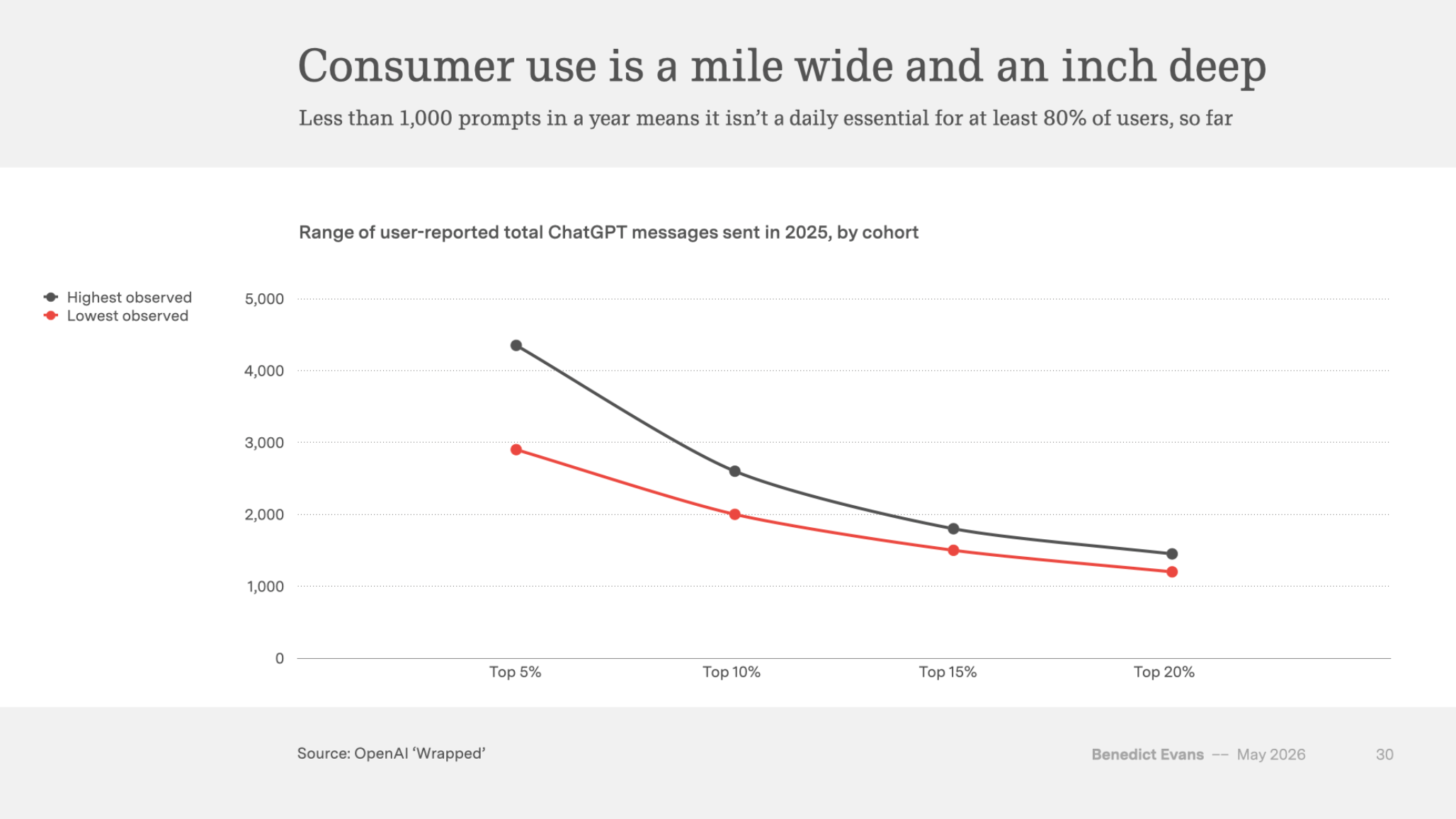
Numbers from the latest presentation from Benedict Evans
This got me wondering: does the same dynamic hold for all lawyers or just the students. I reached out to a person that know this much better than I do.
From students to practitioners: a conversation with Elgar Weijtmans
My experience is primarily with students, so I reached out to Elgar Weijtmans. Weijtmans is a former lawyer from the Netherlands who now supports legal professionals with AI implementation.
He’s run a series of hackathons for practising lawyers, across two days and three separate sessions, and I wanted to hear what he’d seen on the other side of graduation.
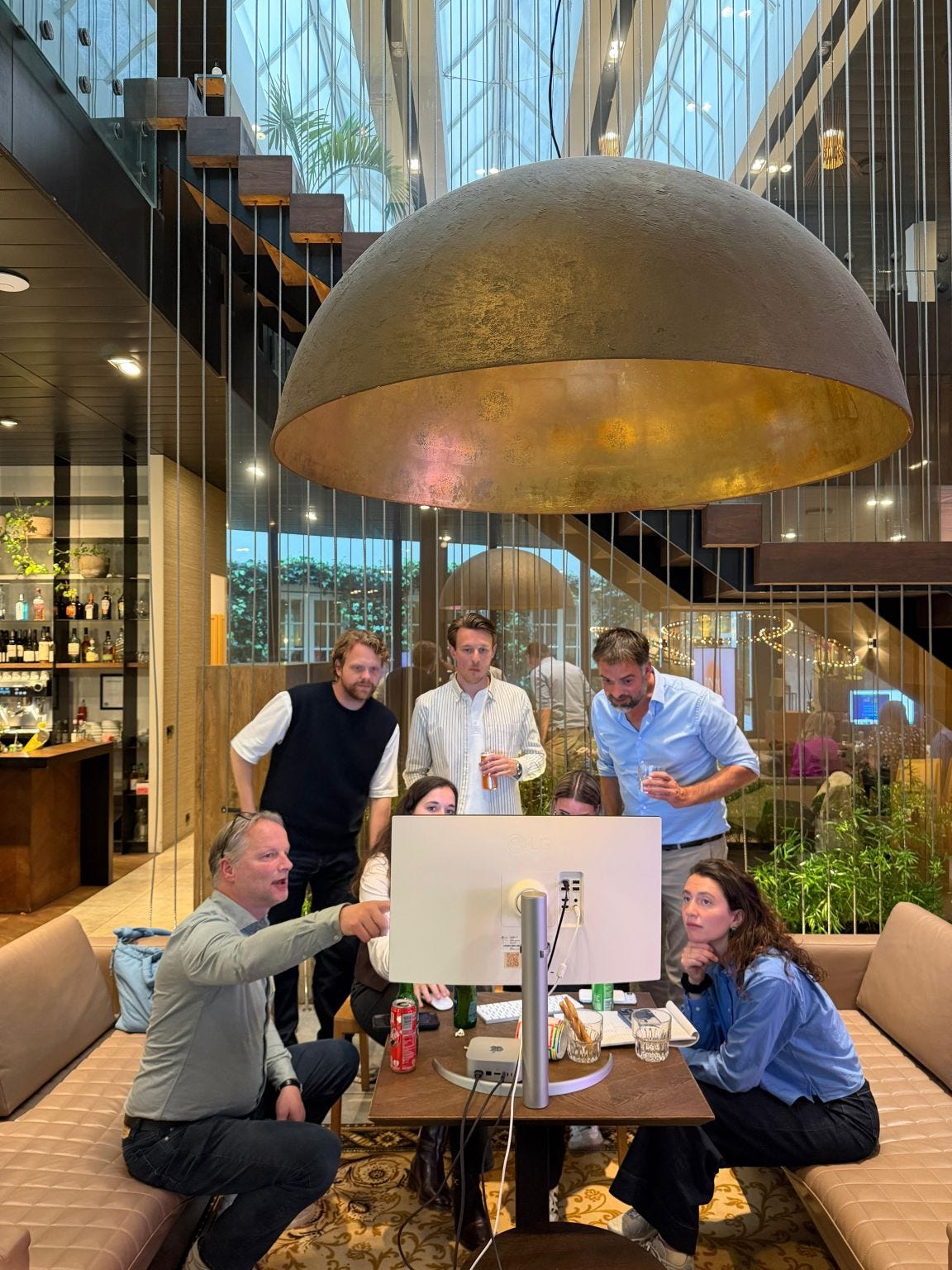
The participants ranged from in-house counsel to associates at firms, with one session dedicated to students at a university of applied sciences. The common thread, Weijtmans thinks, was curiosity.
“Most of these people have had ideas brewing for a while, things like ‘we really need a better way to handle X,’ or frustrations with a specific process. AI has made it impossible to look away, but reading about it only gets you so far. This was the first time many of them could actually try to build something themselves without learning to code first. That tends to get people through the door.”
The ideas that came out of the room were all over the place, which he takes as a good sign. They encouraged people to pick low-stakes topics where a mistake wouldn’t hurt anyone, just to get the momentum going.
One team built “Legally Fit,” a wellness app for better work-life balance among lawyers. Another made a tool to review settlement agreements for employees.
“Basically a quick sanity check on whether anything unusual is hiding in the fine print. That one I thought was excellent, a real everyday pain point turned into a working prototype in a few hours.”
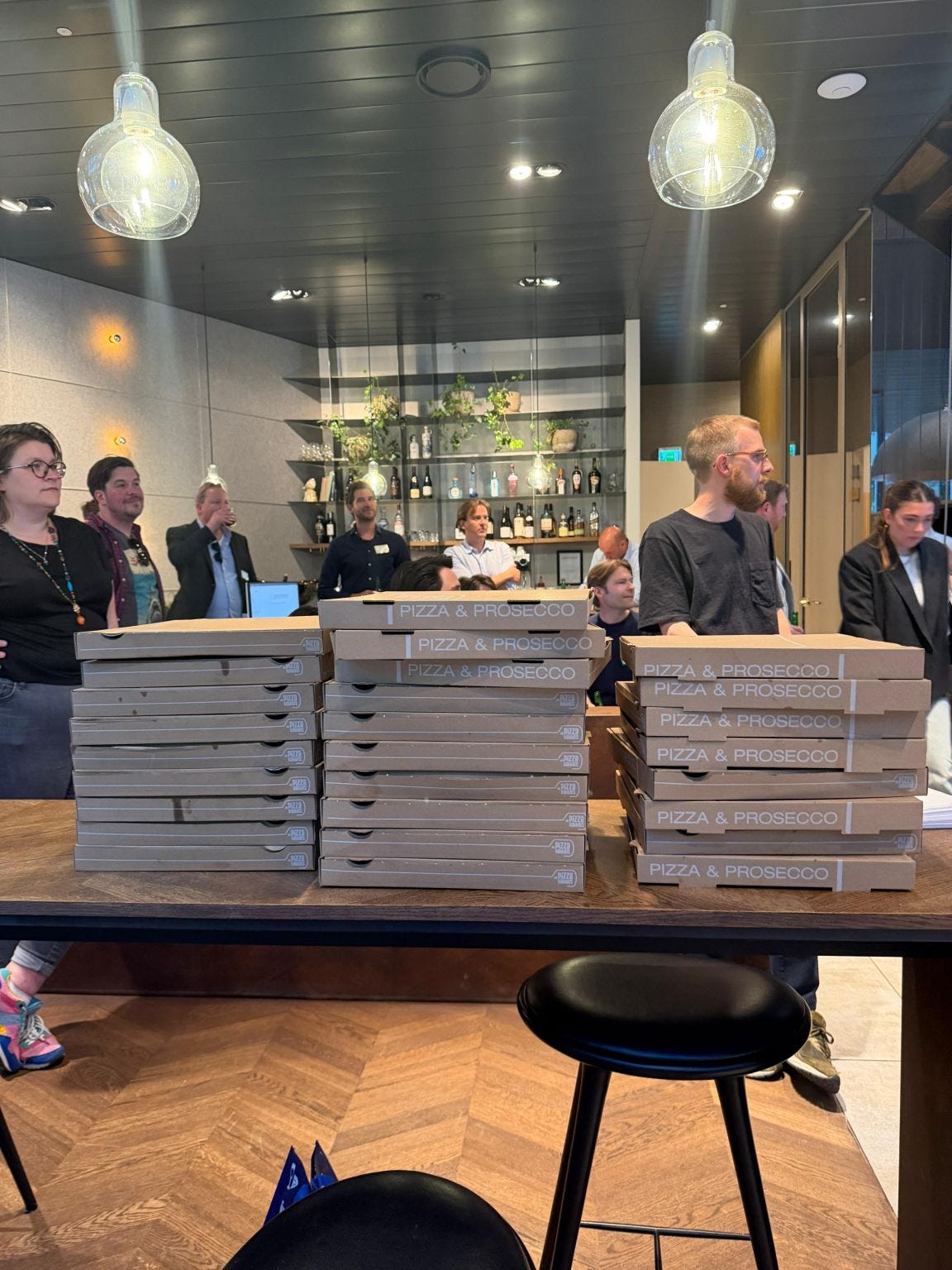
Pizza is mandatory for hackathons.
What surprised him the most was the attitude in the room. “Lawyers can be cautious by nature, and rightly so, but everyone showed up with real enthusiasm.”
A deliberate design choice helped: they sent a video beforehand covering all the risks and limitations of vibe coding. We did the same in Aarhus btw.
With lawyers, if you don’t address that upfront, your entire hackathon becomes a risk workshop. By getting it out of the way early, people felt free to just explore. “What really got me is that everyone left energised and inspired. Not most people. Everyone. That doesn’t happen often.”
On the tooling side, the choice of Claude Code was completely deliberate. “In my view it’s the most complete coding agent available right now for this kind of work. There are plenty of alternatives, Cursor, Lovable, and others, but the pace of development around Anthropic’s tools is remarkable and the quality is consistently high.”
And the simple truth, he says, is that it’s what he uses every single day. If you’re going to teach people how to vibe code, you’d rather show them how you actually do it than demo something you only know in theory.
As for how much of what people built was actually usable the following Monday, Weijtmans draws a clear line between the skills and the artifacts. The skills, understanding what an agent is, how prompting works, what the building process feels like, are immediately transferable.
The apps themselves were never meant to be production-ready. But most teams ended up with something that could genuinely serve as a foundation. “Some of the simpler, lower-risk projects were honestly an afternoon away from being deployable.”
The wrong question
That said, he thinks the fixation on immediate usability misses the point. “Vibe coding has only been feasible since roughly December. The technology is moving so fast that building intuition now is more valuable than shipping something today.
The moment where non-developers can create genuinely useful and safe tools is coming, and it’s coming soon. So the better question isn’t ‘can I use this on Monday?’ but ‘will I be ready when that moment arrives?’”
The question right now is not whether AI will change how you work because it already is. The more interesting finding from these sessions is how quickly lawyers develop intuition for what it means for their specific work once they actually try something.
That's what a Wednesday night in Aarhus or a legal hackathon in the Netherlands gives you.
And that’s why it’s worth it in the long run.
You can follow Elgar’s work and thinking at Unfiltered Bits.
You can see a short video about the Aarhus hackathon here (English Subtitles):
LLMs for LL.Ms: practical observations on AI, law, and building legal technology. Roughly twice a month.
Originally published on Substack →